Key People in EMS History
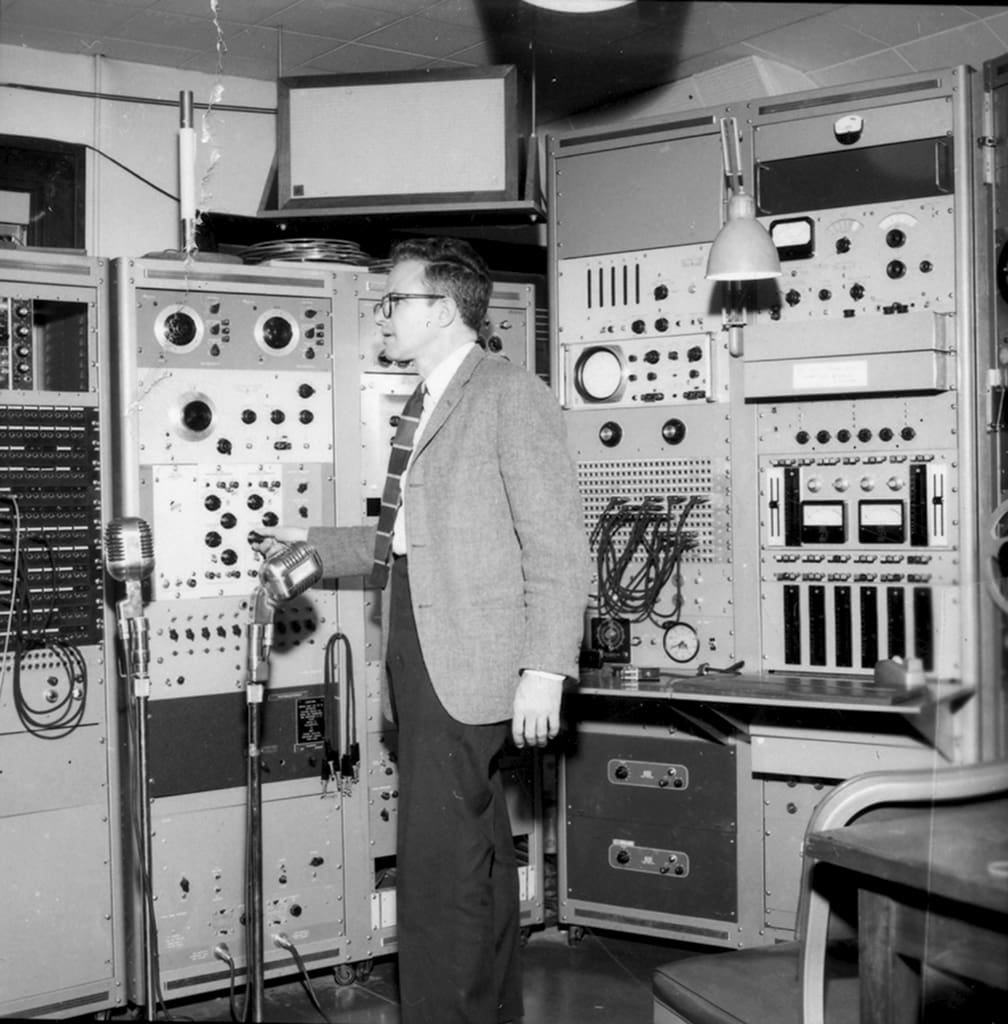
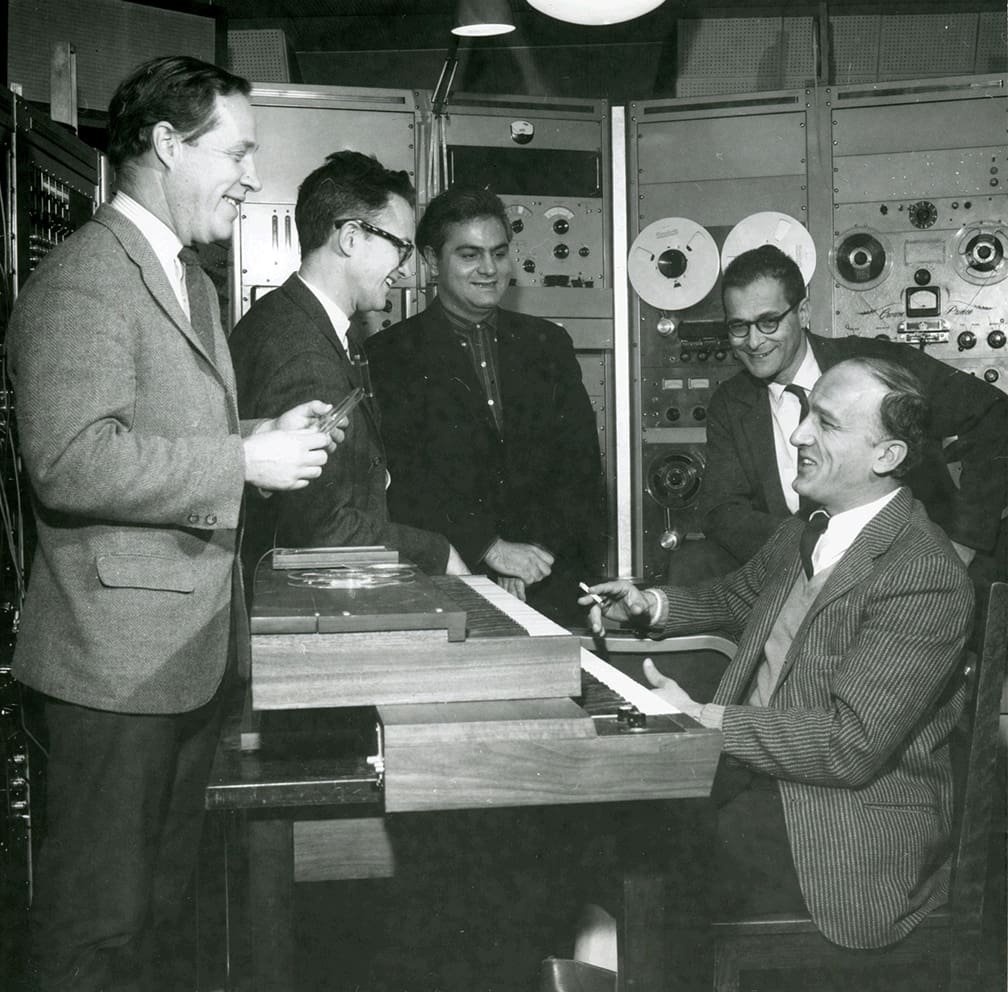
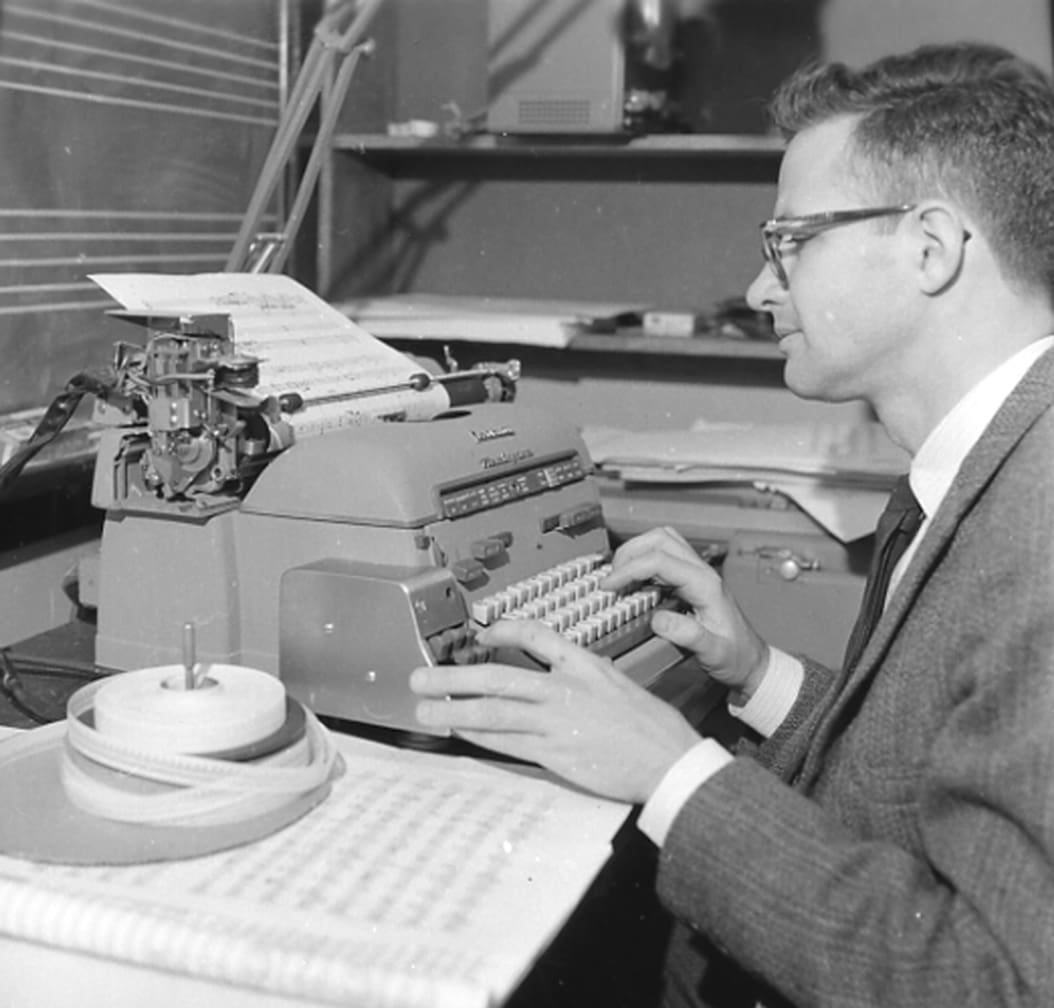
Lejaren Hiller (1924-1994)
Lejaren was a pioneering American composer and chemist who created the first substantial piece of computer produced musical composition. Lejaren bridged the worlds of science and avant-garde art, using high-speed digital mainframes to automate musical decision-making. He received his B.A., M.A., and Ph.D. in chemistry from Princeton University. While at Princeton, Lejaren also studied with Roger Sessions and Milton Babbitt for music composition. In 1952, Lejaren was hired as a faculty member in the Chemistry Department at the University of Illinois at Urbana-Champaign. Interestingly Lejaren obtained a M.M. in music composition from the University of Illinois School of Music while he was teaching in the Chemistry Department. In 1956, in collaboration with Leonard Isaacson, Hiller used the room-sized ILLIAC I Computer to generate the Illiac Suite for string quartet that is widely recognized as the first landmark work of computer-assisted composition. In December 1957, Lejaren wrote a letter to Duane Brannigan, Director of the School of Music, proposing research in experimental music and requesting support for the creation of a specific research facility. By mid 1958, the University of Illinois Experimental Music Studio was established in Stiven House, a University-owned building located across from the Smith Hall Music Building, and Lejaren transferred to the School of Music composition faculty. Unfortunately, financial support for technology in the arts was and is a never-ending effort even to this day. Due to insufficient available funding, Lejaren sought assistance from all avenues of technology for the equipment needed, including used tape recorders from the local radio stations, surplus waveform generators, filters, amplifiers, and equipment cabinets from local television stations and the Electrical Engineering Department, and used patch bay connectors from the local telephone company. Eventually, a one-of-a-kind creative technology facility was created. In 1963, he (with Robert Baker) developed MUSICOMP (MUsic SImulator-Interpreter for COMpositional Procedures), the first software system specifically designed for computer music composition. Lejaren's Computer Cantata (1963) was one of the first works to use his MUSICOMP software. In early 1967, Lejaren began collaborating with composer John Cage for the massive multimedia work HPSCHD, a commission by harpischordist Antoinette Vischer that involved 7 harpsichords, 52 tape recorders, 40 motion picture films, 64 slide projectors, and 59 loudspeakers with the 1969 performance in the newly opened University of Illinois Assembly Hall. Lejaren, who actively looked for more institutional financial support for his creative research, joined the faculty at the University of Buffalo in 1968 where he established the school's first computer music facility. Illness forced him to retire in 1989. For more information: en.wikipedia.org/wiki/Lejaren_Hiller
Sources:
Hiller, L. A., & Isaacson, L. (1959). Experimental music: Composition with an electronic computer. McGraw-Hill.
Roads, C. (1996). The computer music tutorial. MIT Press.
Dodge, C., & Jerse, T. A. (1997). Computer music: Synthesis, composition, and performance (2nd ed.). Schirmer.
University at Buffalo Libraries, University Archives. (n.d.). Lejaren Hiller and computer music at Buffalo. https://library.buffalo.edu/archives/
Lejaren Hiller. (n.d.). In Wikipedia. from en.wikipedia.org/wiki/Lejaren_Hiller
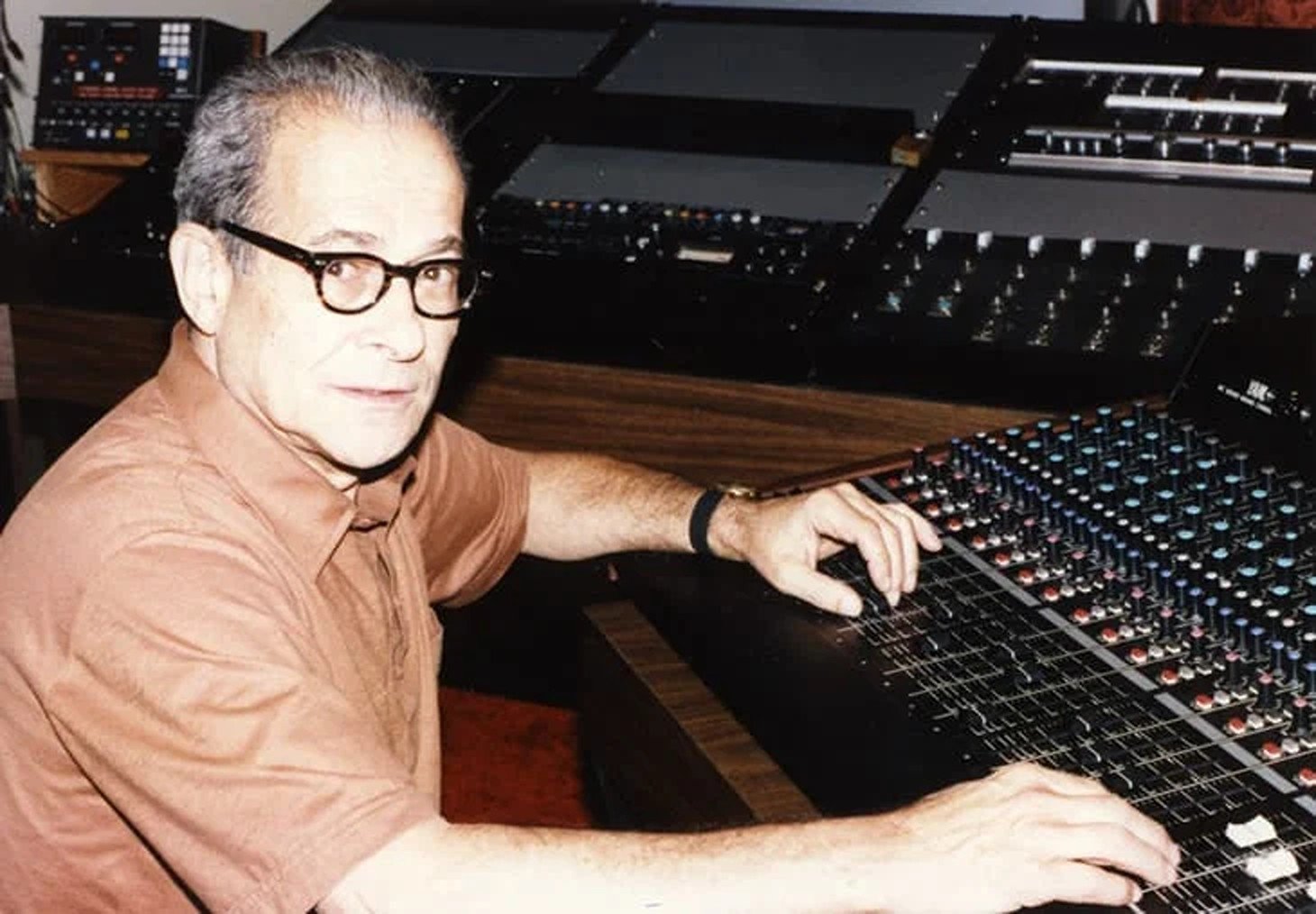
Herbert Brün at UIUC in Studio A 1985
Herbert Brün (1918-2000)
Herbert was a German-American composer, pioneer of electronic and computer music, Professor of Composition, and prominent cyberneticist. He was one of the first to apply computers and electronic methods to musical composition, beginning his research in the 1950s in Paris, the WDR studio in Koln, and at the Siemens studio in Munich. He is also known for his deep philosophical inquiry into the relationship between language, society, and art. He was invited by Lejaren Hiller to join the music composition faculty at the University of Illinois at Urbana-Champaign in 1962, where he spent nearly four decades teaching and collaborating at the Experimental Music Studios and the Biological Computer Laboratory. In 1993 he co-founded the School for Designing a Society, an experimental "lab" to connect compositional thinking with social change. Herbert collaborated with cybernetician Heinz von Foerster and received the Norbert Wiener Medal from the American Society for Cybernetics in 1993 for his contributions to the field. Herbert also was the recipient of the 2001 Society for Electro-Acoustic Music in the United States (SEAMUS) Award. Among his many notable works are: Futility 1964 (1964), Piece of Prose (1972), Dust (1976), More Dust (1977), and on stilts among ducks (1996). He created computer-generated graphics like Mutatis Mutandis (1968) that was intended to be interpreted as musical scores. For more information: en.wikipedia.org/wiki/Herbert_Brün newmusicusa.org/nmbx/composer-herbert-brun-dies-at-82/
Sources:
“Herbert Brün.” In Wikipedia. from en.wikipedia.org/wiki/Herbert_Brün
“Composer Herbert Brün Dies at 82.” New Music USA, https://newmusicusa.org/nmbx/composer- herbert- brun-dies-at-82/
University of Illinois at Urbana-Champaign. “Herbert Brün Papers.” University Archives, https://archon.library.illinois.edu/
American Society for Cybernetics. “Norbert Wiener Award Recipients.” https://asc- cybernetics.org/foundations/cyberneticians.htm
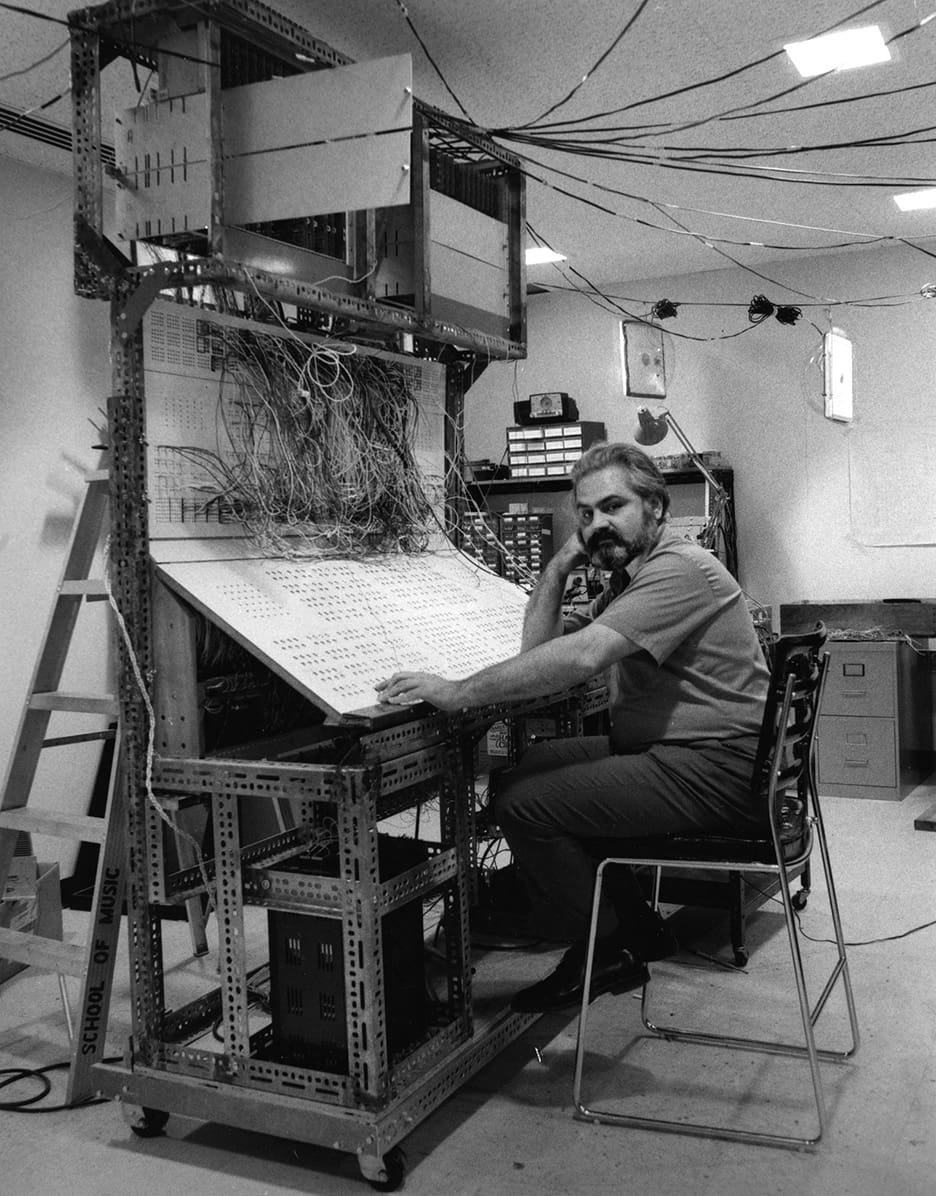
Salvatore Martirano (1927-1995)
Sal was an influential American composer, Professor of Composition, and pioneer of electronic and computer music. Sal's work was defined by its wild eclecticism; seamlessly blending avant-garde classical techniques like serialism with jazz, popular music, and theater. Sal is also known for creating the Sal-Mar Construction (1972), a custom-built electronic instrument featuring digital logic circuits. The instrument allowed Sal to perform in real-time, where the machine responded to his inputs to create complex, non-repetitive musical sequences. He served as a Professor of Composition at the University of Illinois at Urbana-Champaign from 1963 until his retirement in 1995, where he mentored numerous avant-garde composers. Among his many notable works are: O, O, O, O, That Shakespeherian Rag (1959), Cocktail Music (1962), Underworld (1965), L'sGA (1967), and SAMPLER: Everything Goes When The Whistle Blows (1985). Among his many awards and grants for composition include: Fulbright Grant to Italy, Prix di Rome, Fellowship to the American Academy in Rome, Guggenheim Fellowship, and an American Academy of Arts and Letters Award. He received commissions from the Koussevitsky and Fromm Foundations, 1984 Los Angeles Olympic Arts Committee, Cleveland Chamber Symphony, Tone Road Ramblers, Ciosoni Trio, and many individuals and chamber ensembles. For more information: https://sal.martirano.net
Sources:
Martirano, S. (n.d.). Salvatore Martirano. https://sal.martirano.net
University of Illinois Urbana-Champaign, School of Music. (n.d.). Salvatore Martirano. https://music.illinois.edu/about-us/resources/scholarship-competitions-and-awards/martirano- award/about-salvatore-martirano/
Chadabe, J. (1997). Electric sound: The past and promise of electronic music. Prentice Hall.
Roads, C. (1996). The computer music tutorial. MIT Press.
Salvatore Martirano. (n.d.). In Wikipedia. from en.wikipedia.org/wiki/Salvatore_Martirano
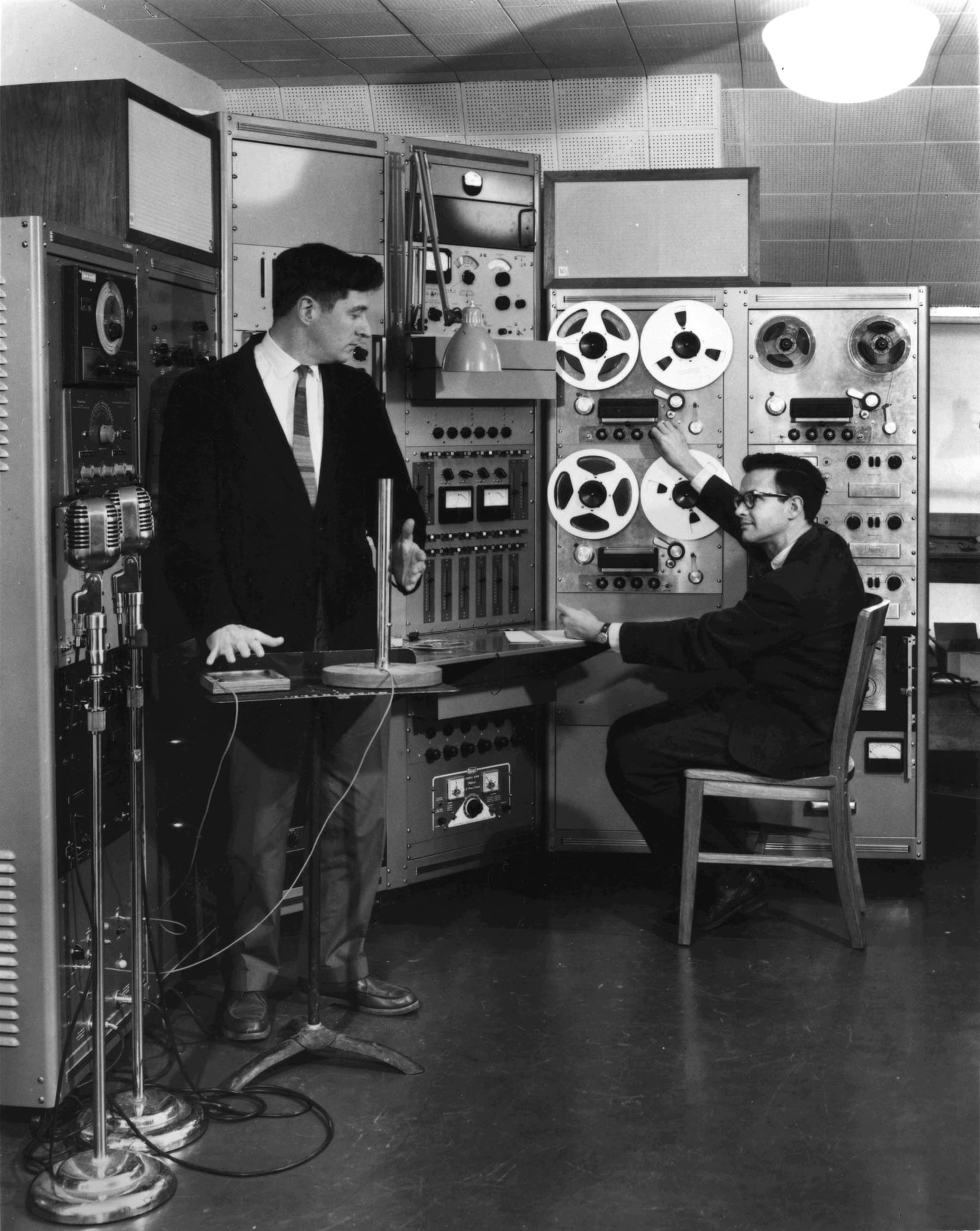
Ben Johnston (1926-2019)
Ben was a prominent American composer renowned for his pioneering work in microtonality and his extensive use of just intonation. Often described as one of the most important contemporary composers of concert music, he is best known for his cycle of ten string quartets, which are considered some of the most technically challenging works in the repertoire. Ben's primary contribution to music was his development of extended just intonation, a system that uses interval based on whole-number ratios rather than the standard 12-tone equal temperament. Ben taught theory and composition at the University of Illinois ay Urbana-Champaign from 1951 to until his retirement in 1983. Ben worked additionally in the Experimental Music Studios creating tape music in collaboration with Jaap Spek. His electroacoustic compositions include: On One (1965), Museum Piece (1968-69), and Kindergarten-Lieder (1970). For more information: en.wikipedia.org/wiki/Ben_Johnston_(composer)
Sources:
Roads, C. (1996). The computer music tutorial. MIT Press.
Chadabe, J. (1997). Electric sound: The past and promise of electronic music. Prentice Hall.
Ben Johnston. (n.d.). In Wikipedia. from en.wikipedia.org/wiki/Ben_Johnston_(composer)
Kenneth Gaburo (1926-1993)
Kenneth was an American composer who in 1943 studied composition at the Eastman School of Music with Bernard Rodgers. He completed his master's degrees in composition and piano by 1949 and then studied in Rome with Goffredo Petrassi. Soon afterward, he began his Doctor of Musical Arts degree at the University of Illinois studying with composers Burrill Phillips and Hubert Kessler. Upon completing his doctorate, he joined the composition faculty at the University of Illinois from 1955 through 1968, while working regularly in the Experimental Music Studios. He also established the New Music Choral Ensemble I, a workshop that explored pitch, duration, timbre, indeterminacy, extended vocal techniques, and the integration of electronics. Among his numerous works, was Lemon Drops that used Jim Beauchamp's Harmonic Tone Generator for its realization. In 1968 Kenneth left the University of Illinois for a teaching position at the University of California at San Diego where he established several versions of his New Music Choral Ensemble. In 1975, he left the University of California at San Diego and began touring professionally. Soon afterward, Kenneth accepted a faculty position at the University of Iowa where he worked until his death in 1993. He also acted as a music publisher founding the Lingua Press in 1975 that he managed until his death in 1993. Lingua Press continued until the company name was changed to Frog Peak Music by Gaburo's business partner, Larry Polansky, also a University of Illinois doctoral composition grad. For more information: en.wikipedia.org/wiki/Kenneth_Gaburo
Sources:
Roads, C. (1996). The computer music tutorial. MIT Press.
Chadabe, J. (1997). Electric sound: The past and promise of electronic music. Prentice Hall.
University of California San Diego, Department of Music. (n.d.). Kenneth Gaburo.
https://music-cms.ucsd.edu/people/faculty/memoriam/kenneth-gaburo
Frog Peak Music. (n.d.). About Frog Peak Music. https://frogpeak.org
Kenneth Gaburo. (n.d.). In Wikipedia. from en.wikipedia.org/wiki/Kenneth_Gaburo
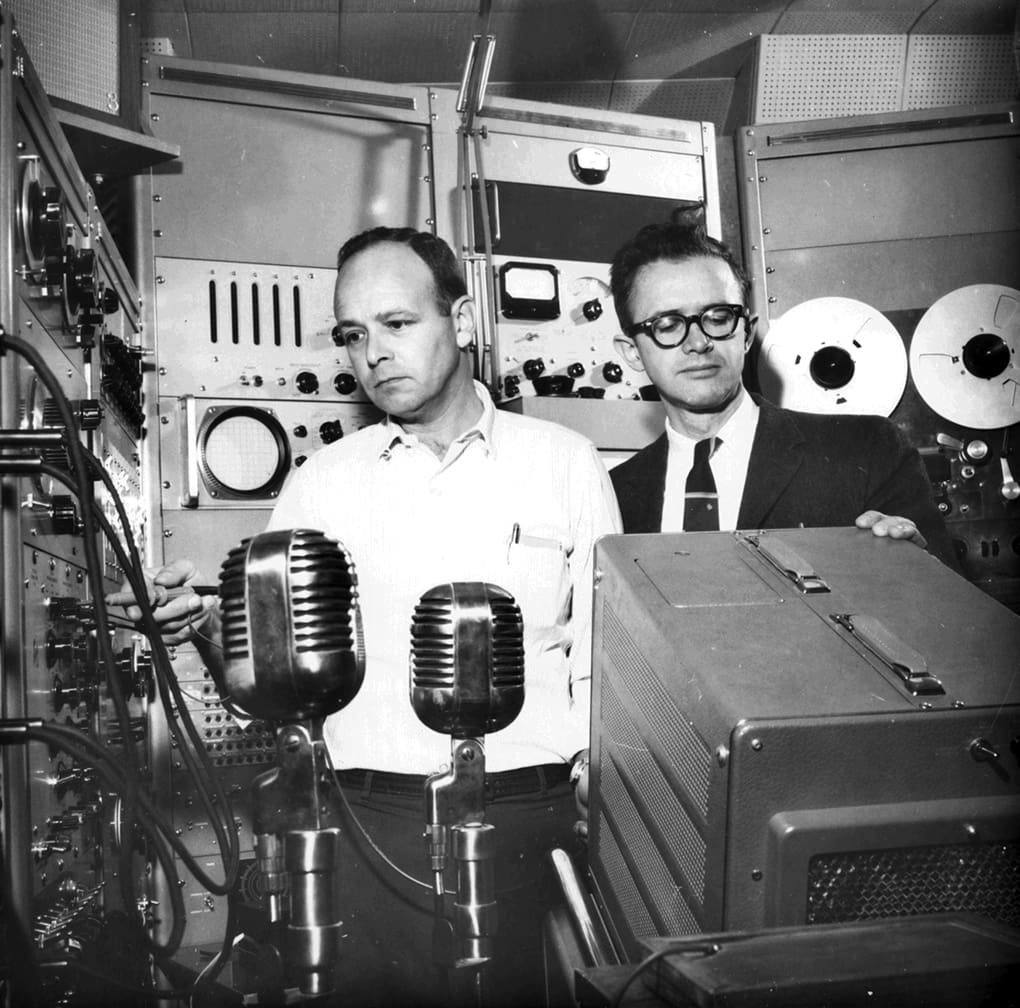
Russ Winterbottom (1927-2016)
Russ enlisted in the U.S. Army Signal Corps and served in the Army through the end of World War II, being discharged in August 1947. He worked at the Champaign Telephone Company as an electronics technician from1950 until 1963 when he was hired at the request of Lejaren Hiller, at the University of Illinois at Urbana-Champaign School of Music, as the electronic music technician for the Experimental Music Studios. In 1972, Russ continued on at the University of Illinois School of Music as the Operations and Inventory Specialist until he retired in 1987. He then worked for the Urbana Schools as an equipment designer/builder for handicapped children until 2005.
Sources:
Owens Funeral Homes. Obituary. Russell E. Winterbottom. owensfuneralhomes.com/obituary/Russell- Winterbottom
University of Illinois Urbana-Champaign Archives. (n.d.). Scott Wyatt Oral History Interview. library.illinois.edu/sousa/wp-content/uploads/sites/99/2024/10/Scott-Wyatt-Interview- transcript1-final.pdf
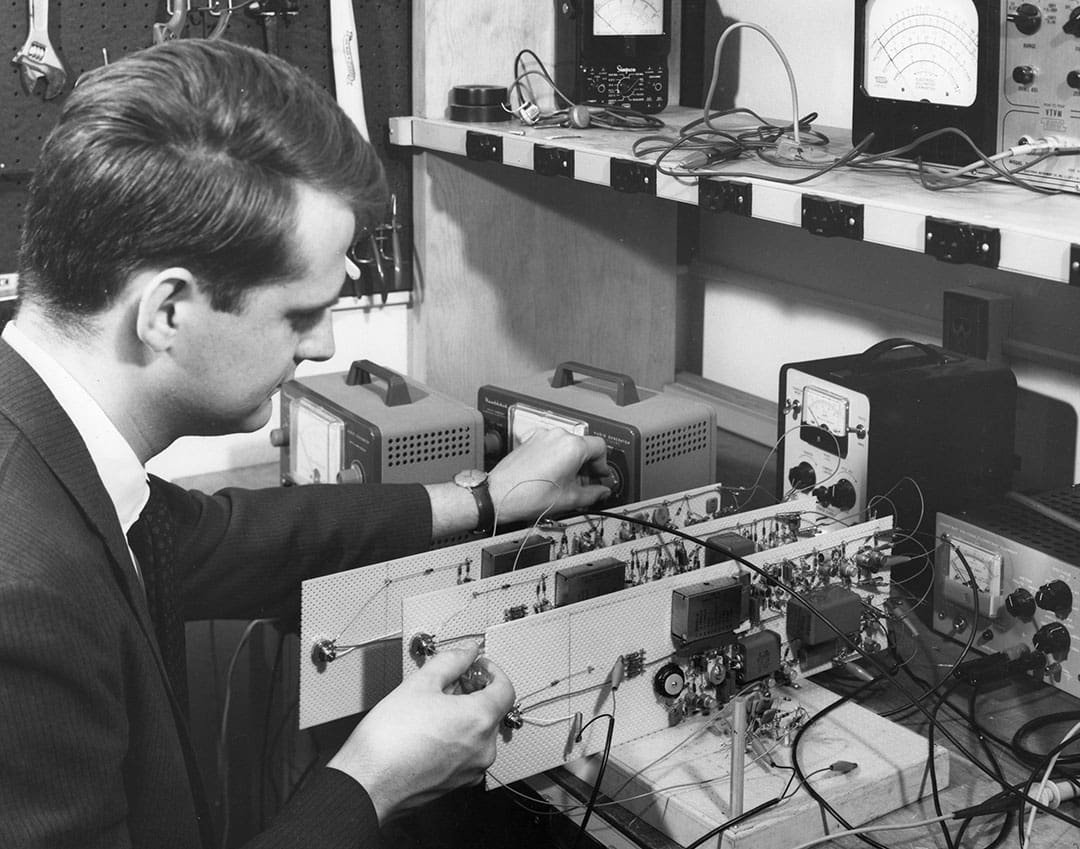
James W. Beauchamp (1937-2022)
Jim was an American engineer, educator, and a pioneer in the field of electronic and computer music synthesis. He spent his career at the University of Illinois at Urbana-Champaign, where he held a rare joint appointment in both the Department of Electrical and Computer Engineering and the School of Music. He was a leading expert in musical acoustics, particularly the study of brass instruments. His research explored whether sound propagation instruments was linear or nonlinear, significantly advancing the understanding of how timbre changes with performance dynamics. In 1964, Jim invented one of the first voltage-controlled electronic music synthesizers, called the Harmonic Tone Generator. Unlike many early synthesizers that used subtractive synthesis, the HTG was based on additive synthesis, combining pure sine waves to create complex musical timbres. Jim served as EMS technical director (1969-72) and EMS Co-director with Scott Wyatt (1975). Jim served as director of the UIUC Computer Music Project (1984-1993). He retired from the University in 1997. For more information: acousticstoday.org/wp-content/uploads/2023/02/Obituary-James-W.-Beauchamp-1937-2022.pdf
Sources:
Beauchamp, J. W. (2023). Obituary: James W. Beauchamp (1937–2022). Acoustics Today. https://acousticstoday.org/wp-content/uploads/2023/02/Obituary-James-W.-Beauchamp-1937- 2022.pdf
Roads, C. (1996). The computer music tutorial. MIT Press.
Chadabe, J. (1997). Electric sound: The past and promise of electronic music. Prentice Hall.
James W. Beauchamp. (n.d.). In Wikipedia. from en.wikipedia.org/wiki/James_Beauchamp
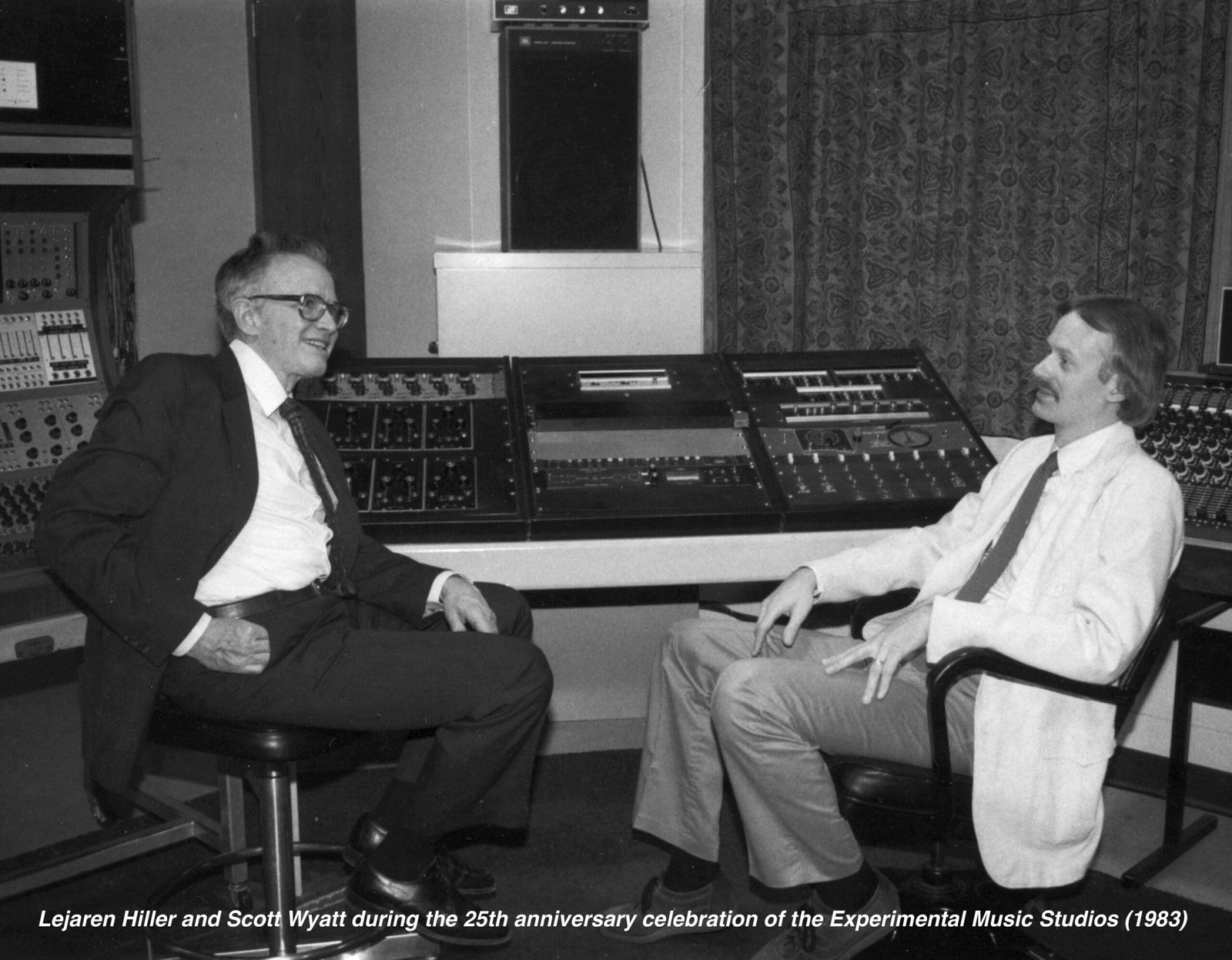
Jaap K. Spek (1929-2003) [some sites indicate 1929-2001]
Jaap was a Dutch sound engineer and philosopher best known for his pioneering work in early live electronic music. He served as a key technician/performer at the WDR Studio fur Electronische Musik in Koln, where he worked closely with composer Karlheinz Stockhausen as tonmeister for Stockhausen's landmark pieces like Mikrophonie I, Mikrophonie II, and Kontakte. He was later invited by Lejaren Hiller and Herbert Brün to serve as an engineer for the University of Illinois at Urbana-Champaign Experimental Music Studios in 1966. There, Jaap maintained and operated the studio's advanced hardware with the assistance of Russ Winterbottom, during a high-output era that saw the development of instruments like the Harmonic Tone Generator and the Sal-Mar Construction. Jaap additionally served as first Audio Director of the University of Illinois Krannert Center for the Performing Arts from 1968 to 1972. Jaap also served as sound engineer at the 1967 performance of John Cage's Musicircus at the University of Illinois, as well as John Cage's and Hiller's 1968 multimedia composition HPSCHD in the newly built University of Illinois Assembly Hall. Jaap also collaborated with composer Ben Johnston on the electronic work Museum Piece (1968) that was commissioned by the Smithsonian Institution. In 1976, Jaap transitioned into more technical optimization work, contributing to the Stockpile optimization project at the University of Illinois Center for Advanced Computation. More biographical details or a list of works, are not extensively documented. For more information: archive2013-2020.ctm-festival.de/archive/all-artists/f-j/jaap-spek/
Sources:
“Jaap Spek.” CTM Festival, https://archive2013-2020.ctm-festival.de/archive/all-artists/f-j/jaap-spek/
WDR Studio für Elektronische Musik. (n.d.). Studio history. https://www1.wdr.de
“Jaap Spek.” Wikipedia. from en.wikipedia.org/wiki/Jaap_Spek
"Jaap Spek." CCM. Composers-Classical-Music.com/s/SpekJaap.htm
John Cage (1912-1992)
John Cage's biography and contributions to music are huge and beyond the scope of this short paragraph. The brevity here is not to short-change his contributions and influence, but to inform you about his association with Lejaren Hiller and the University of Illinois during that time period. You are invited to research John Cage's vast experiments, innovations, compositions, statements, and philosophies that widely influenced the post-war avant-garde. For more information, search John Cage, composer.
John was an American avant-garde composer and philosopher whose inventive compositions and unorthodox ideas influenced mid-20th-century music. He believed there is no such thing as absolute silence; there is only intentional sound and unintentional sound. He is perhaps most famous for his silent composition, 4'33", which invites the audience to listen to the ambient environmental sounds of the performance space rather than intentional notes. His teachers included Henry Cowell and Arnold Schoenberg, both known for their significant innovations in music. John's studies of Indian philosophy and Zen Buddhism assisted with his approach of aleatoric, chance-controlled music initiated in 1951. In 1957, he presented a lecture "Experimental Music", at the Music Teachers National Conference in Chicago—during which he proclaimed: "And what is the purpose of writing music? One is, of course, not dealing with purposes but dealing with sounds. Or the answer must take the form of paradox: a purposeful purposelessness or a purposeless play. This play, however, is an affirmation of life—not an attempt to bring order out of chaos nor to suggest improvements in creation, but simply a way of waking up to the very life we're living, which is so excellent once one gets one's mind and one's desires out of its way and lets it act of its own accord."
In addition to many other academic appointments at various universities, John received a Visiting Lecturer appointment to the University of Illinois School of Music during 1967-68. He worked closely with Lejaren Hiller to create a large-scale multimedia work, HPSCHD, commissioned by harpischordist Antoinette Vischer, that combined performances of Cage's and Hiller's music on seven harpsichords, 52 tape recorders playing computer-generated sounds on tape played over 59 loudspeakers, 40 motion picture films projected on screens, and 6400 slides projected from 64 slide projectors in a five-hour performance at the newly opened University of Illinois Assembly Hall in 1969. Audience members were encouraged to move throughout the performance space and could enter or leave the space at any time.
Sources:
Cage, J. (2013). Silence: Lectures and writings. Wesleyan University Press.
Cage, J. (1967). A year from Monday: New lectures and writings. Wesleyan University Press.
Pritchett, J. (1993). The music of John Cage. Cambridge University Press.
Revill, D. (1992). The roaring silence: John Cage—A life. Arcade Publishing.
University of Illinois Urbana-Champaign. Distributed Museum. HPSCHD. distributedmuseum.illinois.edu/exhibit/hpschd/
Cage, J. (n.d.). In Wikipedia. from en.wikipedia.org/wiki/John_Cage
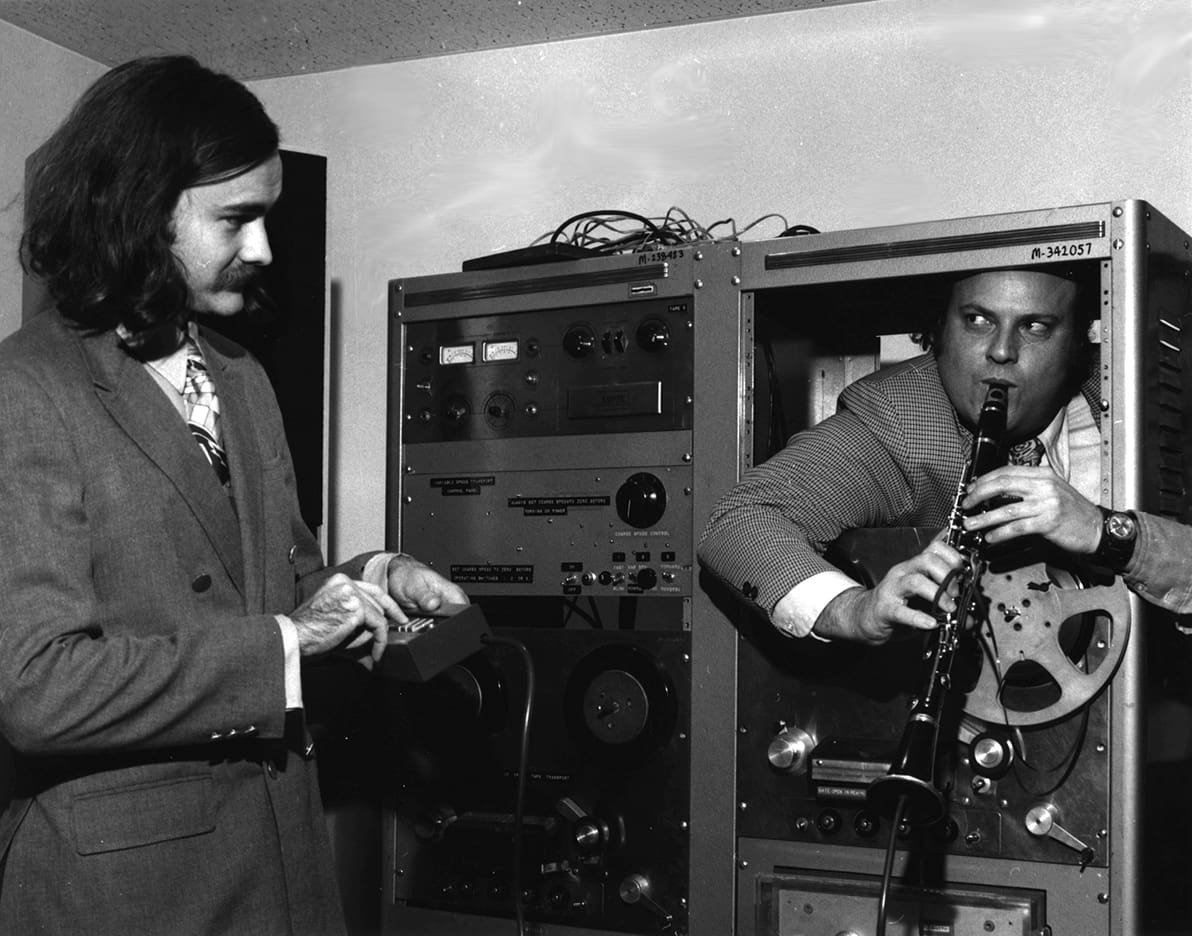
Phil Musser (dates unknown)
Phil was a technologist and musician associated with the University of Illinois Experimental Music Studios in 1970, and assisted with new studio facilities being located in the new Music Building, one block away from the original Stiven House EMS location. Phil received a Lecturer position (part-time) in 1972 and was asked to serve as EMS Director, under the guidance of a newly formed faculty EMS Policy Committee. He was responsible for the EMS move to the then new Music Building in 1972, and he set-up several studios within the new building, working along side of Herbert Brün, James Beauchamp, and Paul Martin Zonn. More biographical details or a list of works, are not extensively documented.
Sources:
University of Illinois at Urbana-Champaign. University Library. Sousa Archives and Center for American Music. Urbana-Champaign Local Music Oral History with Scott Wyatt About the University's Experimental Music Studio. www.library.illinois.edu/sousa/2017/01/03/urbana-champaign- local-music-oral-history-with-scott-wyatt-about-the-universitys-experimental-music-studio/
Joe Pinzarrone (dates unknown)
Joe is a pianist, composer, and technologist known for his collaborations in performance and experimental music. He has been involved in projects including political theater works and jazz influenced compositions alongside collaborators like Damon Short and Steve Duke. Joe received a part-time Lecturer position at the University of Illinois in 1973 where he served as Director of the University of Illinois Experimental Music Studios through 1975 under the guidance of a faculty EMS Policy Committee. He was awarded a faculty position at Northern Illinois University School of Music in 1978 (through the 1980s) where he served as Director of the electronic music studio there. He was a member of the Neoteric Ensemble at Northern Illinois, a group focused on modern and experimental works. One of his notable early scores, "Tales of Power." was originally for a dance theater company at the University of Delaware under the direction of Debra Loewen and later performed at NIU. After his time in academia, Joe transitioned into the commercial sector, spending roughly a decade in the commercial music industry before becoming a consultant for small tech companies in the early 2000s. He became the CEO of Prism Logic. More biographical details or a list of works, are not extensively documented.
Sources:
dekalborama blog pages. Word from the grave 13 May13 by Joe Pinzarrone. http://dekalborama.com/2013/word-from-the-grave-13-may-13/
Steve Duke. (n.d.). In Wikipedia. from en.wikipedia.org/wiki/Steve-Duke
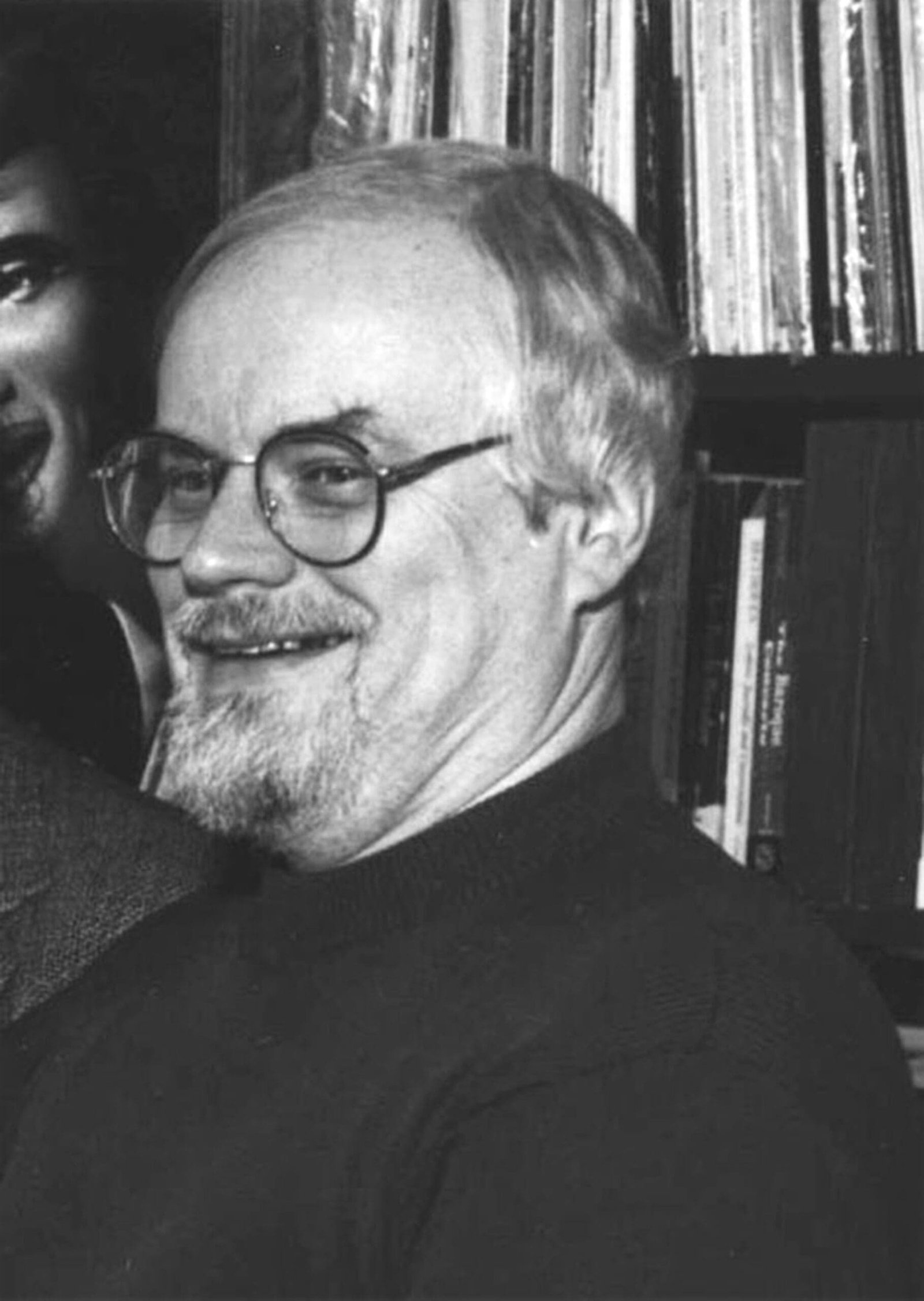
John Melby (1941- )
Jack is a prolific American composer best known for his music for computer-synthesized sounds, with live acoustic instruments or for computer alone. He holds degrees from the Curtis Institute of Music, the University of Pennsylvania (having studied composition with Henry Weinberg and George Crumb), and at Princeton University (having studied composition with Peter Westergaard, J. K. Randall, and Milton Babbitt). He taught theory and composition at West Chester University beginning in 1971. In 1973 he became composition-theory faculty at the University of Illinois at Urbana-Champaign School of Music where he was Professor of Music until his retirement in 1997. Jack's compositions received numerous awards and have been performed widely in the United States and abroad. He was a recipient of an NEA Fellowship in 1977, a Guggenheim Fellowship in 1983, an award from the American Academy and Institute of Arts and Letters in 1984, and an Associate award at the Center for Advanced Study at the University of Illinois in 1989. He received several awards for his compositions at the International Electroacoustic Music Festival Awards in Bourges, France, where he also received First Prize in 1979 for his Chor der Steine for computer-synthesized sounds. Jack's catalog includes many compositions for chamber, vocal, and orchestral works, and since 2010 he has focused on writing for chamber ensembles and symphony orchestra. For more information: www.johnmelby.com
Sources:
John Melby. (n.d.). John Melby. www.johnmelby.com.
John Melby. (n.d.). In Wikipedia. from en.wikipedia.org/wiki/John_Melby
Scott A. Wyatt (1951- )
Scott has actively served as Professor of Composition at the University of Illinois School of Music teaching music composition, music theory, audio recording techniques, and electroacoustic music, as well as serving as director of the University of Illinois Experimental Music Studios for 40 years (1976-2016). He retired from the University of Illinois in 2016. As a composer of concert art music, he composed works for theatre, voice, acoustic instruments, small and large ensembles, orchestra, electroacoustic music, and music for a variety of media including modern dance, documentary film, radio, television, and large scale laser presentations. His electroacoustic music is recorded on 26 published vinyl and CD recordings listed on this website and on Wikipedia. His continuing research involves the development and application of positional three-dimensional audio imaging for multi-channel audio and his spatialization designs for 8-channel performance. Scott was the recipient of the 2018 Society for Electro-Acoustic Music in the United States (SEAMUS) Award. For more information: music.illinois.edu/people/profiles/scott-wyatt/ en.wikipedia.org/wiki/Scott_Alan_Wyatt https://scottawyatt.com
Sources:
Wyatt, S. A. (n.d.). Scott A. Wyatt. https://scottawyatt.com
University of Illinois Urbana-Champaign School of Music. (n.d.). Scott Wyatt profile. https://music.illinois.edu/people/profiles/scott-wyatt/
Scott A. Wyatt. (n.d.). In Wikipedia. from https://en.wikipedia.org/wiki/Scott_Alan_Wyatt
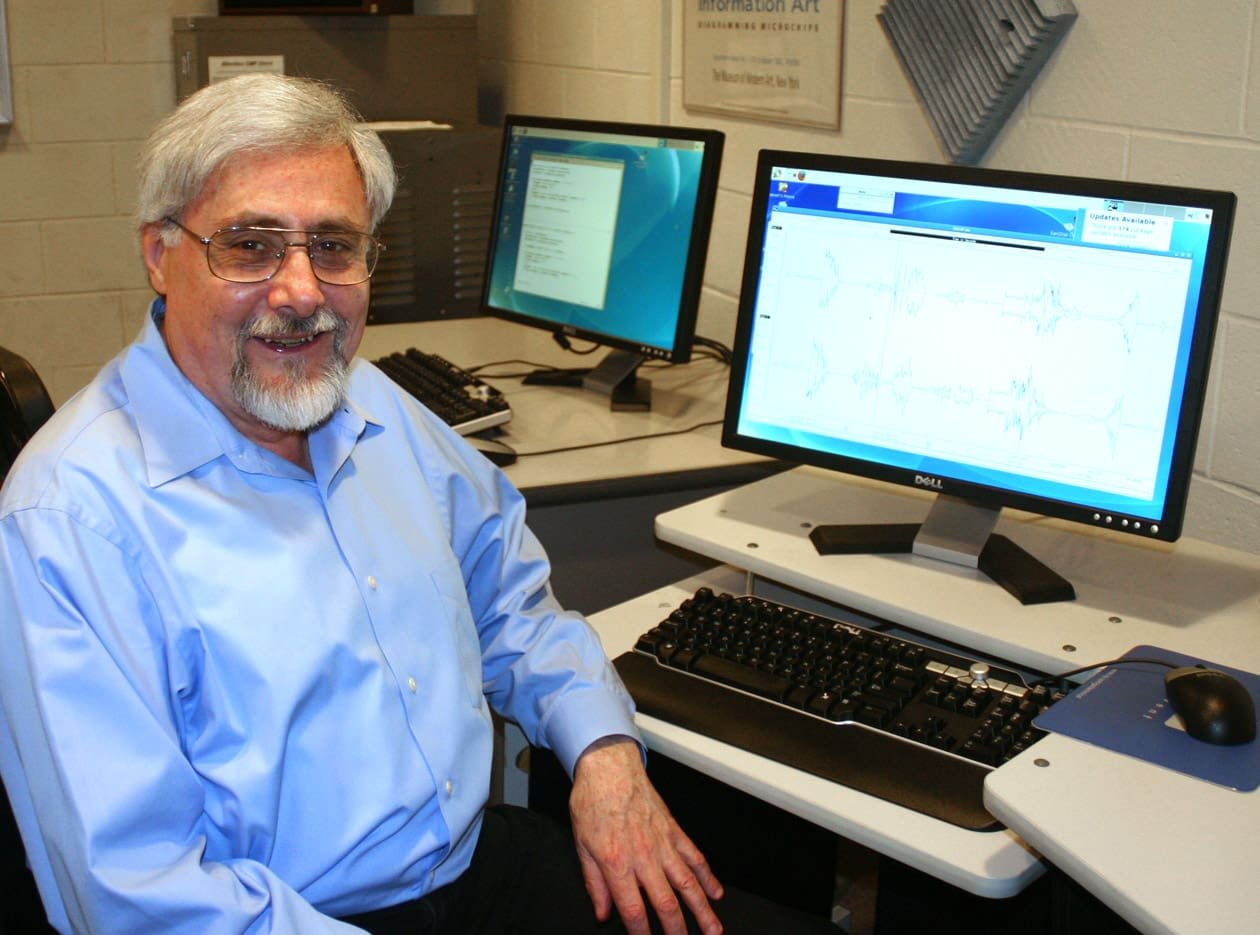
Sever Tipei (1943- )
Sever is a contemporary Romanian-American composer, pianist, and theorist renowned for his pioneering work in computer-assisted composition and music formalization. Sever served as manager/director of the Computer Music Project of the University of Illinois Experimental Music Studios and has taught composition, music theory, computer music, and music formalization at the University of Illinois at Urbana-Champaign since 1978. He retired in 2021 and now, as Professor Emeritus, he continues to teach at the University of Illinois School of Information Sciences (Ischool) where he directs the James W. Beauchamp Computer Music Project, and continues his work as a Center Affiliate at the National Center for Supercomputing Applications. Sever's early program for computer-assisted composition MP1 (in use between 1973 and 1998) was the first such program to be implemented on a supercomputer (NCSA's CRAY X-MP) in 1986. His more recent project, DISSCO, a Digital Instrument for Sound Synthesis and Composition, available on Github.com represents a unified approach to composition and sound synthesis. In 1989 he introduced the concept of "manifold composition," the collection of all actual and potential variants of a computer-generated musical work that contains elements of indeterminancy. For more information: music.illinois.edu/people/profiles/sever-tipei/
Sources:
University of Illinois Urbana-Champaign School of Music. (n.d.). Sever Tipei profile. https://music.illinois.edu/people/profiles/sever-tipei/
National Center for Supercomputing Applications. (n.d.). Affiliates and research programs. https://www.ncsa.illinois.edu
Roads, C. (1996). The computer music tutorial. MIT Press.
Sever Tipei. (n.d.). In Wikipedia. from en.wikipedia.org/wiki/Sever_Tipei
Eli Fieldsteel (date unknown - biographical details suggest he was likely born in mid-to-late 1980s)
Eli is an Associate Professor of Composition at the University of Illinois at Urbana-Champaign and is currently the Director of the Experimental Music Studios. He is a prominent figure in the SuperCollider community; known for his extensive educational resources, live coding performances, and academic work. He maintains an active teaching presence online through a popular series of YouTube video tutorials. In January 2024, he completed a comprehensive textbook titled SuperCollider for the Creative Musician: A Practical Guide through the Oxford University Press. The book is designed for both beginners and intermediate practitioners. As a composer and sound artist, he focuses on human-computer improvisation and interactivity. His research often explores the use of sensor-driven music and the intersection of music technology with other arts likes dance and video. For more information: music.illinois.edu/people/profiles/eli-fieldsteel/
Sources:
Fieldsteel, E. (2024). SuperCollider for the creative musician: A practical guide. Oxford University Press.
University of Illinois Urbana-Champaign School of Music. (n.d.). Eli Fieldsteel profile. https://music.illinois.edu/people/profiles/eli-fieldsteel/
Fieldsteel, E. (n.d.). Eli Fieldsteel [YouTube channel]. YouTube. https://www.youtube.com
Eli Fieldsteel. (n.d.). http://elifieldsteel.com
Get in Touch
If you have any questions or need further assistance with the documents, don't hesitate to contact us. We are here to help you navigate and utilize our resources effectively.